
False Equivalence
Also known as: fe, false-equiv
Treating two things as equivalent when they differ in ways that matter to the argument.
Also described as: making a false comparison, comparing two things that are not alike, "both sides are the same"
Share: also:
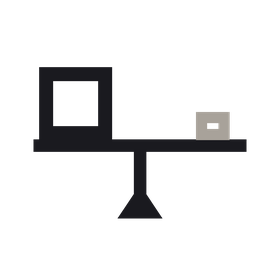
In plain terms
A false equivalence puts two things side by side as if they were the same in the way that counts, when they aren't. "They both did X" can be technically true while hiding a difference in scale, intent, or consequence so large that the comparison misleads more than it informs.
The comparison usually shares one real feature. That shared feature is then treated as if it erased every difference around it.
Why it's fallacious
Comparisons carry an implied claim: these things are alike in the respect we're discussing. When the likeness is superficial and the differences are decisive, the comparison smuggles in a conclusion the evidence doesn't support. Two things being members of the same broad category doesn't make them equivalent for the purpose at hand.
A jaywalker and a bank robber both broke the law. Equating them because of that shared fact would obscure everything that matters: harm, intent, scale. The category "lawbreaker" is real and useless here.
Canonical example
"Both candidates have had ethics questions raised, so really they're equally corrupt. It's a wash."
"Ethics questions raised" is doing enormous work in that sentence. A parking-ticket dispute and a federal indictment can both be described as "ethics questions raised." Collapsing them into a single bucket called "equally corrupt" treats radically different magnitudes as the same, and lets the speaker dismiss the comparison entirely. The shared label hides the difference that the argument is actually about.
Counter-example (not a fallacy)
"Both of these data breaches exposed customer payment information to the same kind of attack, affected a similar number of users, and stemmed from the same unpatched vulnerability. Treating them as comparable is fair."
This isn't false equivalence. The two things are alike in precisely the respects the argument depends on: cause, scale, and consequence. A comparison is legitimate when the shared features are the relevant ones and the differences don't undermine the point. The fallacy only appears when the differences that matter are waved away.
The line: are the things alike in the way the argument needs them to be, or only in some surface label?
How to fix it
If you've been linked here, check whether the two things you compared are actually alike in the dimension that matters to your point, not just in some shared word. The fix is to name the specific respect in which they're comparable and confirm the differences don't sink the comparison. "Both are X" is only an argument if X is the thing under discussion. If the scale, intent, or consequences differ sharply, either account for that or drop the comparison.
If you're on the receiving end, name the difference being smoothed over: "Those aren't the same in the way that matters here. One is X, the other is Y, and that gap is the whole point." A real comparison can defend its likeness on the relevant axis.