
Fundamental Attribution Error
Also known as: fae, attribution
Explaining other people's behaviour by their character while explaining your own by circumstances.
Also described as: explaining someone's behaviour by their character, assuming bad intent, blaming personality over circumstances
Share: also:
In plain terms
Someone cuts you off in traffic. They are a reckless idiot. You cut someone off last Tuesday because you were late for a hospital appointment and your lane was ending.
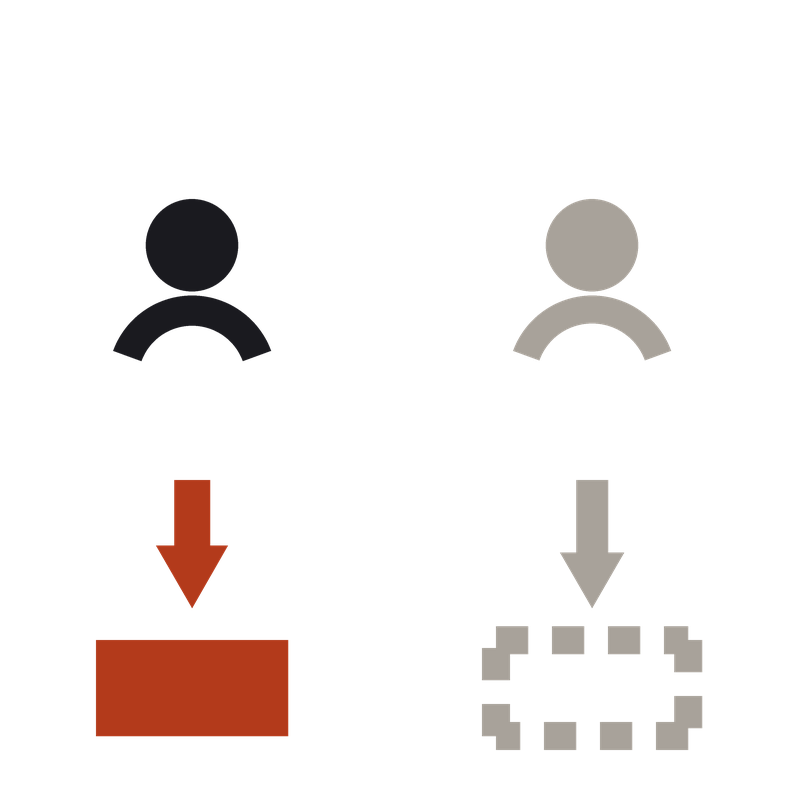
Same behaviour, two explanations. Theirs came from who they are. Yours came from what was happening. The fundamental attribution error names the habit of over-weighting character and under-weighting situation when explaining other people. The related actor-observer asymmetry names the flip side: for ourselves, we reach for the situation first.
Part of this is just information. You know about your hospital appointment. You know nothing about the other driver's day, so character is the only variable you have to hand.
Why it matters
Judgment gets worse in a predictable direction. Treating behaviour as a readout of personality produces predictions that don't hold, because behaviour varies enormously with context and the same person acts differently under different pressure. Performance reviews, hiring calls, and every argument about whether someone is "difficult" run on this machinery.
In debate it feeds straight into ad hominem, and into the pattern where a person's position gets explained by their character instead of engaged on its merits. Once you have decided the other side argues that way because of who they are, there is nothing left to talk about.
Accuracy about the research matters here, because this bias gets cited with more confidence than the evidence supports. The classic studies, including Jones and Harris in 1967, are real and have replicated. Later work qualified the picture considerably. The effect looks weaker or differently shaped in cultures with more interdependent self-construals, where situational explanations come more readily, and several researchers argue the actor-observer asymmetry is much smaller than the textbook version claims. The pattern is worth knowing. "Fundamental" and "universal" are not the same word.
Canonical example
"Dan was late to the client call again. He just doesn't care about this account."
Possibly. Or the previous meeting overran, or the invite carried the wrong time zone, or he was handling something nobody told you about.
The tell is the jump from one observation to a stable trait. "Doesn't care" is a claim about Dan in all situations, built from a data point about one morning. If Dan described the same lateness, he would give you the meeting that overran, and he would probably be right.
Run it from the other side and the asymmetry is obvious. When you are late, you know the reason and you offer it. When someone else is late, you don't have their reason, so you fill the gap with disposition, which is always in stock and never needs looking up.
Counter-example (not a fallacy)
"Dan has been late to eleven of the last fifteen calls, across three schedules and two teams. At some point this is a pattern, not a run of bad mornings."
Not the attribution error. That is inference from repeated observation across varied situations, which is exactly the evidence that separates disposition from circumstance. Character explanations are not banned. They are expensive: they need more than one instance, and preferably instances where the situation changed.
Situational explanations get overdone in the other direction too. Explaining away every failure by circumstance produces its own blind spot, and organisations do this reliably with people they like.
The line: does the claim about character rest on behaviour across different situations, or on the one situation you happened to watch?
How to fix it
If you've been linked here, run the swap. Describe the behaviour, then ask what situation would have to be true for you to have done the same thing, and check whether you actually know it isn't. Usually you don't, which is the point. The honest version of the judgment is "he was late and I don't know why," and that is a better starting position than a verdict about how much he cares. If the behaviour repeats across changing circumstances, a claim about the person becomes reasonable, and you will be able to say why.
If you're on the receiving end, offer the situation rather than the label. "Here's what happened this morning" does more work than "that's the fundamental attribution error," which sounds like a claim about how the other person thinks and tends to produce the defensiveness you were hoping to avoid.