
Hindsight Bias
Also known as: hb, knew-it-all-along
Once an outcome is known, it feels like it was predictable all along, and earlier uncertainty gets remembered as confidence.
Also described as: saying it was obvious all along, "I knew it", being wise after the event
Share: also:
In plain terms
The result comes in and the past rearranges itself. The warning signs stand out. The decision looks obvious. You remember expecting this, and you remember expecting it more strongly than you did.
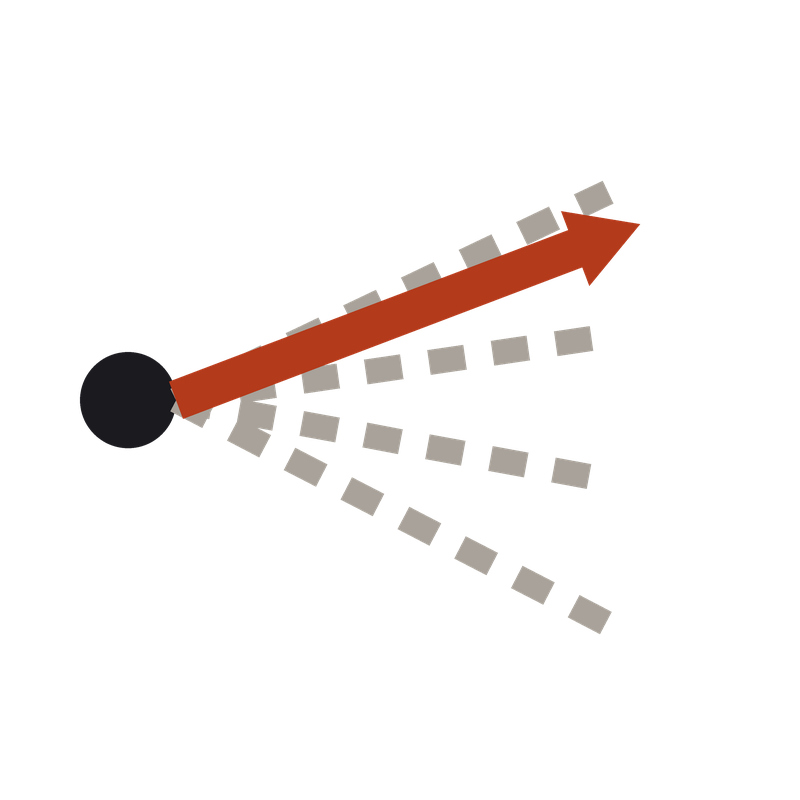
Hindsight bias is that reshaping. Fischhoff's work in the 1970s showed the shape of it: told an outcome, people recall having assigned it a higher probability beforehand than they actually did, and they do it without noticing. The name sometimes used for it, creeping determinism, captures the mechanism. A spread of possible futures collapses into the one that happened, which then looks like the only option there ever was.
Two things break at once. You misremember your own forecast, and you judge the person who made the decision as though they had your information.
Why it matters
The damage lands on learning. A post-mortem run under hindsight bias finds a culprit instead of a cause. The decision looks stupid, so the explanation must be carelessness or someone ignoring the obvious. The warning that seems glaring afterwards sat in a queue with forty others that all looked the same at the time.
This is why aviation and medicine take procedural care with reviews. Outcome knowledge makes reviewers harsher, and studies of clinical judgment have found reviewers rating identical care as substandard more often when told the patient did badly. The care did not change. The ending did.
It also inflates confidence about the future. If the past looks obvious in retrospect, prediction feels tractable, and you take positions with a certainty your record does not support. Combine it with survivorship bias and you get the standard business story in which a company's success was inevitable from the first day.
Canonical example
"It was completely predictable. They expanded into three markets at once with no local partners. Anyone could see it was going to fail."
Anyone could see it afterwards. Before the outcome, the same strategy was being described as decisive and well capitalised, and the firms that did the same thing and survived are written up as case studies in boldness.
The giveaway is that the list of causes is short and tidy. Real decisions are made with many signals of unknown weight. After the fact, the signals pointing at what happened get promoted, the rest are forgotten, and a messy judgment call turns into an obvious error. Ask the critic what they wrote down at the time and the tidiness usually goes.
Counter-example (not a fallacy)
"Three engineers filed written concerns about that component eight months before the failure, naming the specific mechanism. The reports are in the tracker."
Not hindsight bias. That is documented foresight, and the documentation is the whole difference. Somebody made the call in advance, in writing, while the outcome was still open.
Some outcomes were genuinely predictable, and some were predicted. Treating every after-the-fact criticism as hindsight bias is its own error, and it becomes a shield for decisions that really were bad on the information available. The question is what was known, by whom, and when.
The line: is there a record of the prediction from before the outcome, or is the prediction being reconstructed from it?
How to fix it
If you've been linked here, the cheapest fix is to write predictions down before you find out. A dated note with a probability on it costs a minute and it is the only reliable defence against your own memory. When reviewing a decision afterwards, rebuild what was on the desk at the time: the information available, the alternatives considered, the other warnings competing for attention. Judge the process rather than the outcome, because good decisions lose sometimes and bad ones get lucky.
If you're on the receiving end, ask what the other person thought last month rather than naming the bias. Most people answer honestly, and the answer is usually less certain than the current version. If they did call it in advance and can show you, they earned the point and the criticism stands.